
EVs
European Submarines Ditch Cold War Tech for High-Density Lithium-Ion Battery Systems
Saft is supplying EV-style lithium-ion battery storage systems to power Barracuda and Scorpene Class nuclear submarines, replacing legacy lead-acid tech.
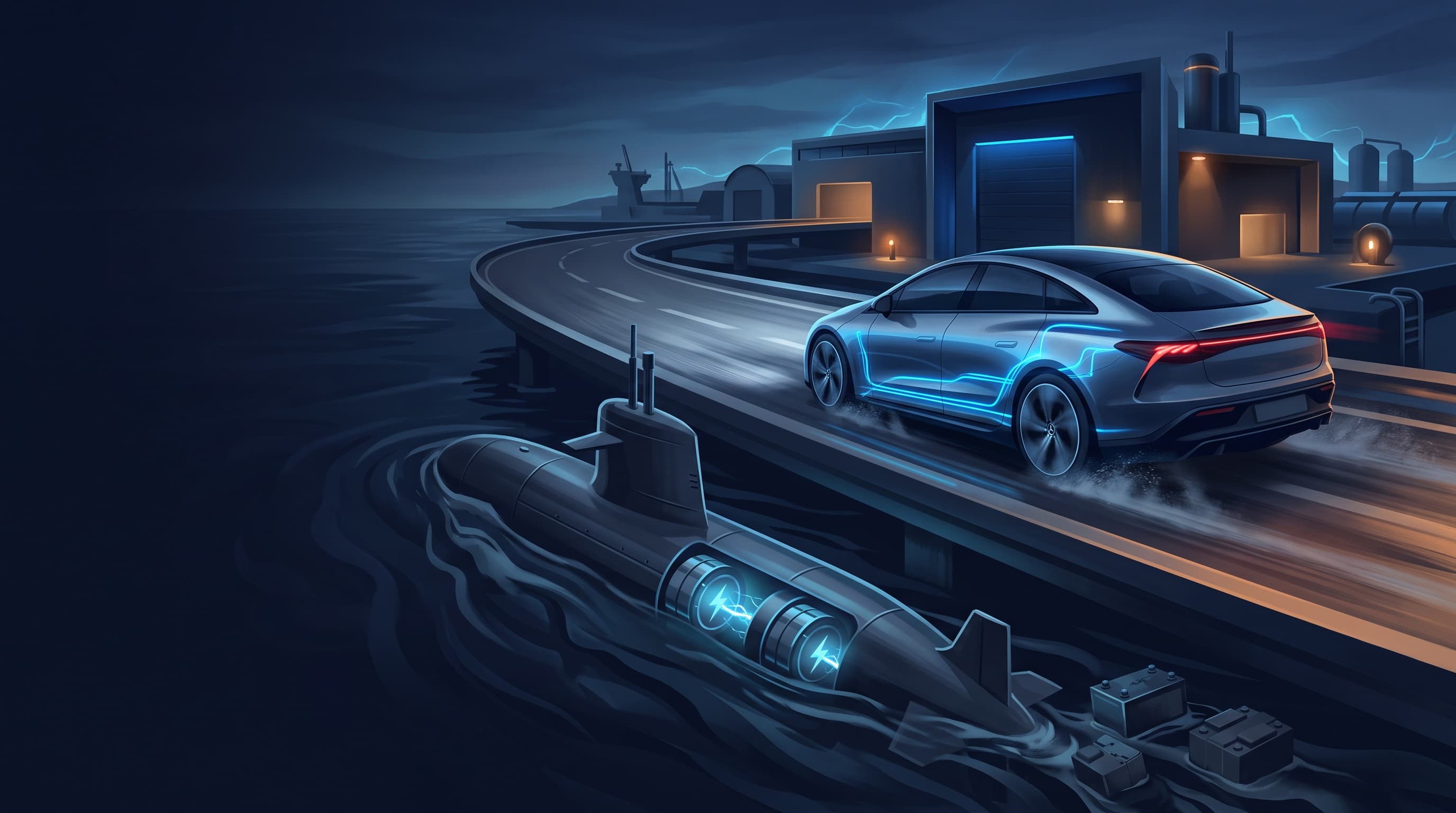
European defense contractor Saft is set to supply lithium-ion battery systems for the next generation of naval submarines. This shift replaces decades-old lead-acid battery technology—which has remained in service on nuclear submarines since the Cold War—with EV-style power packs that offer higher energy density, faster charging, and superior underwater endurance.
Naval Group announced plans to install Saft’s proprietary lithium-ion battery energy storage systems (BESS) into both Barracuda Class and Scorpene Class nuclear submarines. Although nuclear submarines generate vast amounts of power, they rely heavily on massive onboard battery banks to manage operational demands and store electrical power.
How Submarine Power Plants Work
Inside a nuclear submarine, the internal reactor generates an enormous supply of energy via nuclear fission. However, the reactor itself does not directly drive the ship's propeller in the manner of a conventional vehicle engine. Instead, nuclear fission produces intense heat, which is used to boil water into steam. That steam drives equipment to generate electricity, which then powers the submarine’s operational systems and propulsion machinery.
Despite the reactor's capability, submarines require battery storage to handle specific operational scenarios. Massive battery banks store electricity so the vessel can operate as quietly as possible, respond quickly to sudden changes in power demand, or keep essential life-support systems running independently if the main reactor is shut down. Beyond energy storage, the weight of these battery packs is carefully integrated into the ship's structural design to help maintain proper balance and underwater stability.
Packing More Energy into a Smaller Footprint
While traditional lead-acid batteries have provided energy storage for decades, they suffer from significant drawbacks—namely, taking up a huge amount of valuable internal space inside the hull.
By contrast, Saft’s lithium-ion technology allows naval architects to pack significantly more energy into a smaller, high-performance footprint. According to the report, this transition enables submarines to spend longer periods operating solely on stored power. The space savings also potentially free up room inside the hull, improving life at sea for sailors.
Executive Insights and Strategic Impact
Cedric Duclos, Chief Executive Officer of Saft, stressed the significance of the move toward modern energy storage in naval applications:
“This contract confirm that advanced battery technology is now a defining factor in submarine performance. Our Li-ion systems set a new standard in energy density, safety and reliability, positioning Saft at the heart of next-generation naval defense programs. This is also a clear step forward for European technological sovereignty.”
Saft operates as a subsidiary of energy and petroleum giant TotalEnergies. TotalEnergies sees the new supply contract as a key step in strengthening its overall position within European defense programs, while confirming a growing demand for advanced battery technology in specialized maritime applications.
Get launch updates and ownership notes in your Garage.