
EVs
Toyota Warns of Survival Crisis as Next-Gen Corolla EV Takes Center Stage
Facing fierce competition from Tesla and Chinese rivals like BYD, Toyota is overhauling its most iconic vehicle for the electric era while company leaders warn that traditional methods will no longer suffice.
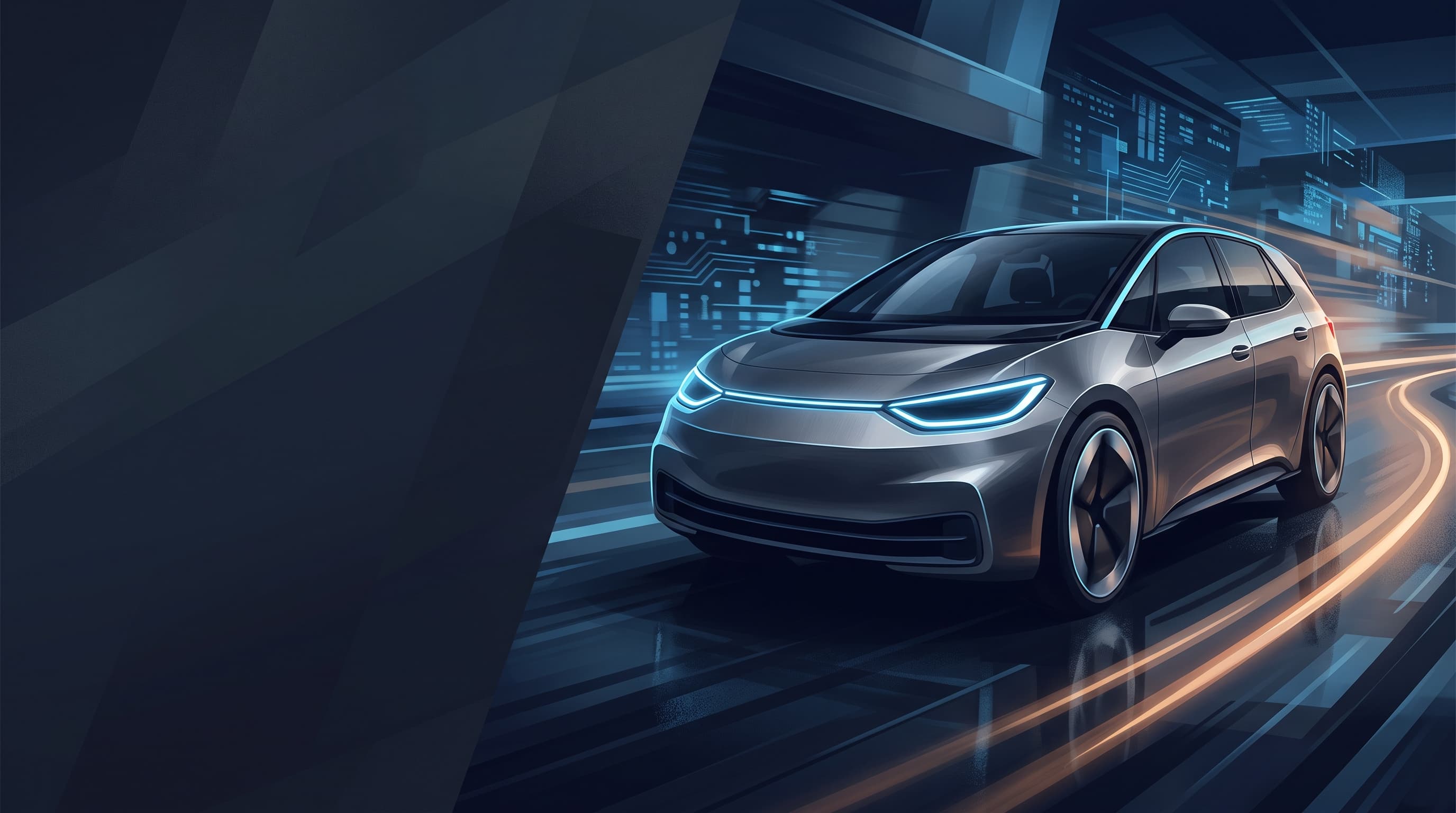
Toyota is preparing for a pivotal shift as it develops the next-generation Corolla EV, framing the moment as a make-or-break transition for the company. With 12 model changes and over 57 million units sold since its initial launch 60 years ago, the Corolla has long surpassed the Volkswagen Beetle to become the world’s best-selling vehicle of all time. However, leadership at the Japanese automaker warns that relying on past success is no longer an option.
During an exclusive 50-minute interview broadcast on Japanese media outlet NHK on Sunday, July 19, Toyota’s chairman and former CEO, Akio Toyoda, characterized the Corolla as “a symbol of Toyota” while addressing the intense pressure the brand faces. The NHK special offered a look behind the scenes at Toyota’s top-secret development site, where engineers are actively working on the next-generation Corolla.
While Toyota retained its position as the world’s largest automaker in 2025, the rise of Tesla and rapid expansion by Chinese automakers like BYD are pushing the global auto industry to evolve rapidly. “There seems to be a considerable sense of crisis within the company,” Toyoda revealed during the NHK broadcast. He noted that evolving technology and fresh competition “are inevitable,” pointing out that the primary risk facing Toyota today is becoming complacent. “If that happens, it’s over,” Toyoda cautioned, adding, “Unless Japan is a country chosen by every other country, it cannot survive.”
That internal concern extends directly to the engineering ranks. When asked for an honest assessment of Toyota’s competitive standing during the broadcast, one engineer admitted, “I think we are losing to China.” Toyota engineers voiced specific concerns regarding the company’s current development cycles and manufacturing techniques when compared with fast-moving Chinese competitors such as BYD.
Despite these anxieties, Toyota showed off several concept prototypes during the broadcast. The featured prototype remains nearly identical to the Corolla Concept presented at the Japan Mobility Show last October. It features a low-slung silhouette, a sports-car-like front end, a closed-off grille, and an integrated charge point signaling the development of a battery-electric vehicle (BEV) variant. In images documented from almuraba, several distinct body styles were visible under development at the facility, including a sedan, a hatchback, a crossover, and a performance-oriented GR model.
CEO Koji Sato promised that the upcoming next-generation Corolla is “packed with innovations.” However, rather than utilizing a dedicated, pure-EV skateboard chassis, the new model will rely on a versatile platform engineered to accommodate multiple powertrains. “Whether it’s a battery EV, plug-in hybrid, hybrid, or internal combustion engine vehicle―whatever the power source―let’s make good-looking cars that everyone will want to drive!” Sato stated following the concept’s initial unveiling.
This multi-powertrain strategy highlights Toyota’s ongoing approach to the EV market. While the brand has built recent sales momentum with updated electric models like the 2026 bZ (known as the bZ4X overseas), the C-HR (C-HR+), and the bZ Woodland (bZ4X Touring), it continues to balance pure electric production alongside hybrid and internal combustion engine (ICE) offerings. Furthermore, Toyota canceled the Lexus LF-ZC last month—a flagship EV that was previously expected to introduce advanced battery technology and modern manufacturing processes.
Meanwhile, rival automakers are pushing aggressively for global dominance. BYD, which stopped building purely ICE-powered vehicles in 2022 to concentrate strictly on EVs and plug-in hybrids, surpassed Ford in 2025 to become the sixth-largest automaker in the world. BYD CEO Wang Chuanfu recently stated that his company intends to “truly become the No. 1 automaker globally in terms of scale” within the next five years.
As NHK reported, Toyota finds itself “in the midst of unprecedented transformation.” Realizing that it cannot survive by clinging strictly to traditional manufacturing and development methods, the automaker is placing its future directly on the success of its flagship high-volume model.
Get launch updates and ownership notes in your Garage.